

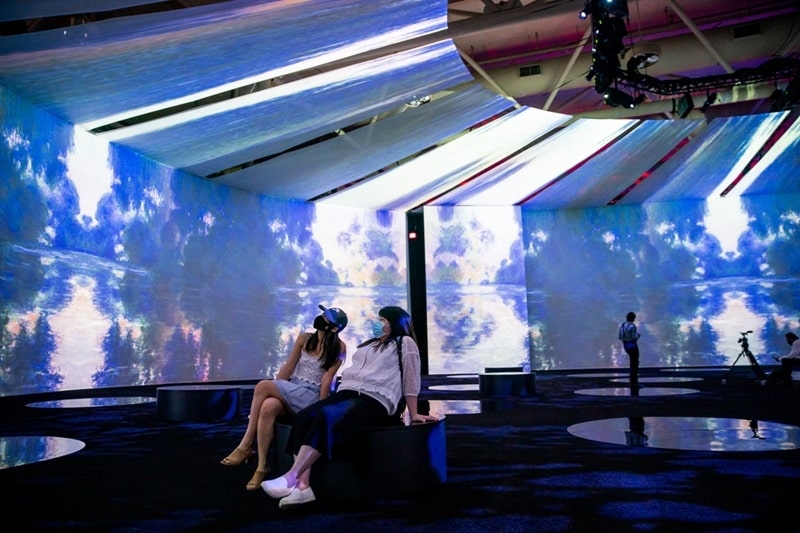
Art used to ask viewers to stand still. You walked into a gallery, kept your distance, and observed. The artwork stayed put. You did not. That quiet agreement shaped how people experienced creativity for decades.
Holography disrupted that agreement. Suddenly, art floated. It shifted. It responded. It asked viewers to move, to circle, to step closer. The artwork no longer lived only on walls or pedestals. It lived in space.
That shift is why holographic art installations feel less like objects and more like encounters. They changed not just what people see, but how they participate in digital art.
Below are ten installations that did exactly that. Each one pushed boundaries. Each one rewired expectations. And together, they reshaped how digital art is experienced around the world.
Holography introduced depth where flat screens once ruled.
Instead of watching digital content, audiences started sharing space with it. Light became material. Motion became meaning. Presence became part of the artwork.
These installations did more than impress. They asked new questions about authorship, interaction, and what it even means to “view” art.
That is where the transformation began.
This installation marked a turning point in large scale digital art.
Using massive datasets and holographic projections, the work surrounded viewers with constantly evolving forms. It felt alive. Unrepeatable. Almost conscious.
People did not just watch. They wandered. They lingered. They lost track of time.
This work became one of the most talked about famous holographic installations because it turned data into atmosphere.
This installation blurred physical space and digital narrative.
Holographic visuals mixed with sound and architecture, creating an environment rather than a display. Viewers moved through it, not past it.
It challenged how information flows and how bodies exist inside digital systems.
That embodied experience pushed hologram art exhibits beyond spectacle into social commentary.
In this installation, Abramovi? appeared as a hologram performing a silent durational piece.
Visitors entered a dark space and encountered her presence without her physical body. The effect was intimate, unsettling, and deeply emotional.
This work proved holography could preserve presence, not just visuals. It expanded what holographic museum displayscould communicate.
teamLab’s installations removed boundaries entirely.
Holographic projections flowed across walls, floors, and bodies. Art responded to movement. Colors shifted as people passed through.
Nothing stayed still. Nothing belonged to one person.
These immersive environments redefined interactive hologram art by making viewers part of the system rather than observers of it.
Murakami’s iconic imagery entered holographic space through layered projection and spatial light.
Familiar motifs gained depth and motion, transforming recognizable visuals into immersive encounters.
This installation showed how established artists could extend physical work into digital dimensions without losing identity.
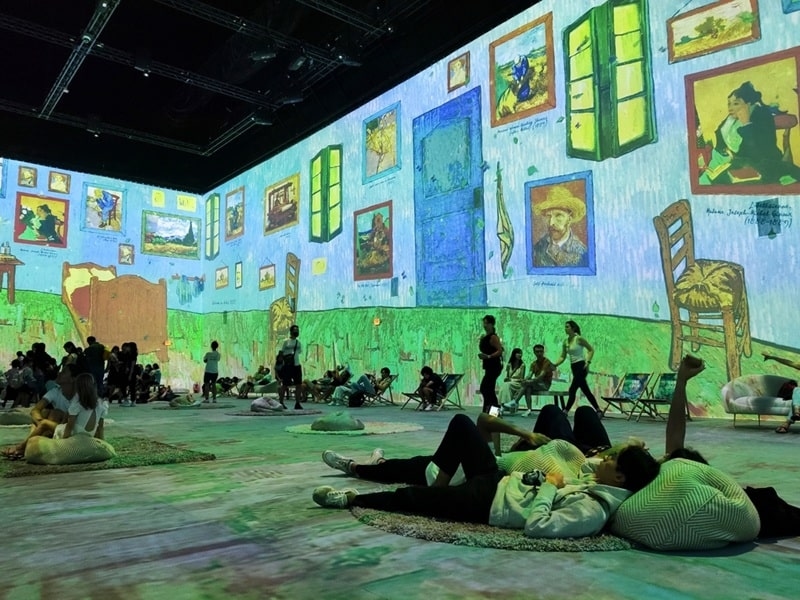
This holographic installation invited visitors into a dreamlike lunar environment.
Poetry, sound, and floating visuals combined to create a contemplative space. Movement altered perception subtly.
It demonstrated how holography could slow audiences down instead of overwhelming them, a rare quality in digital work.
This installation used light and holographic depth to turn space itself into sculpture.
Forms appeared and dissolved as viewers moved. There was no single perspective. No fixed moment.
Volume became a reference point for public hologram installations that prioritize experience over permanence.
Though not purely holographic, this work used depth based projection to transform bodies into interactive silhouettes.
Visitors watched themselves morph, dissolve, and reform through motion sensitive visuals.
It paved the way for future holographic art installations that place the audience at the center of transformation.
This installation created human like holographic figures that walked endlessly through space.
Their forms changed continuously, blending architecture, biology, and movement.
Viewers felt a strange kinship with these digital beings, highlighting how presence can be emotional even without physicality.
This work merged classical themes with futuristic holographic environments.
Figures seemed to be frozen in time, with computerized depth and slow motion added to them.
It took hologram art exhibits into the realm of stories, showing that holography could communicate complicated stories.
These works did not just impress galleries.
They influenced design, architecture, retail, and education. They showed that digital art could occupy physical space meaningfully.
Museums began rethinking layout. Cities explored immersive displays. Brands borrowed techniques.
The ripple effect continues.
Interaction changed everything.
When art responds to movement, viewers become collaborators. No two experiences match. Memory becomes personal.
That shift is why interactive hologram art feels so powerful. It turns passive consumption into engagement.
People remember what they help create.
Public environments brought new challenges.
Light, weather, crowds, distraction. Holographic installations adapted by becoming dynamic and temporary.
These public hologram installations activated plazas, facades, and transit hubs, meeting people where they already were.
Art became part of daily movement, not a destination.
Museums adopted holography to extend storytelling.
Artifacts gained context. History gained motion. Narratives layered over objects without touching them.
This approach preserved integrity while expanding interpretation.
That balance explains the rise of holographic museum displays worldwide.
Holographic installations changed how people feel around digital art.
They created awe without distance. Intimacy without isolation. Presence without permanence.
Viewers stopped scrolling and started lingering.
That emotional shift defines the success of this medium.
Technology will continue to improve. Lighter systems. Better depth. Smarter interaction.
But the most important evolution is conceptual.
Artists are no longer asking what holography can do. They are asking what it should say.
That maturity marks a new chapter.
Holographic art installations did more than add technology to galleries.
They redefined space as a medium. They invited bodies into the artwork. They changed viewing into participation.
Digital art stopped being something you watched.
It became something you entered.
They are immersive artworks that use holographic or spatial projection techniques to create digital visuals that exist in real physical space.
Hologram art exhibits add depth and presence, allowing viewers to move around and interact with digital elements rather than viewing them on flat screens.
No. Many appear in public spaces, festivals, and outdoor environments as temporary or permanent public hologram installations.
This content was created by AI