

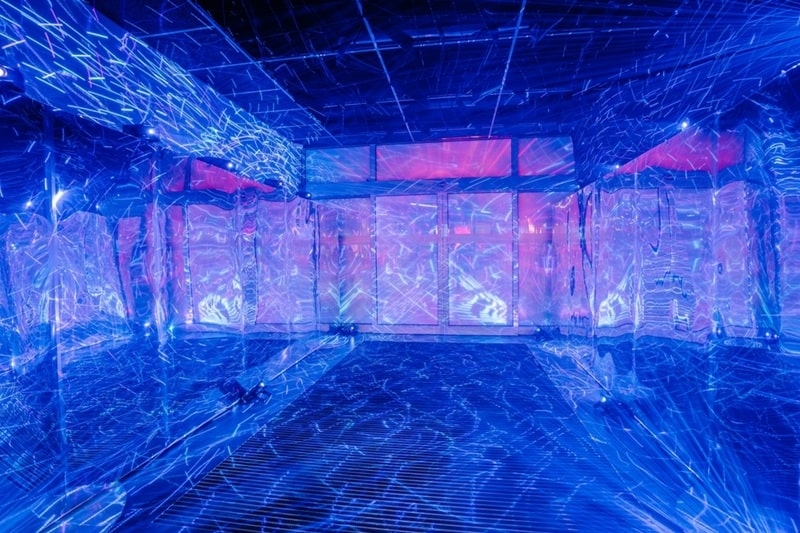
Holography is no longer limited to a laboratory or sci-fi cinema. These days, artists apply holographic graphics in art galleries, musical performances, installations, fashion shows, and digital art galleries. As new art media emerge, arts professionals find themselves confused about a huge question that surrounds their creations.
The major question is real holography vs digital holography. This tutorial provides an explanation of both techniques in a simplified manner that helps artists make informed decisions.
In making a comparison of real holography vs digital holography, one would find that this is less about which is better and more about what experience is desired.
Real holography has an authenticity that digital holography cannot beat. The image is real and responds to light in the same way as an actual object. Creative expression is offered by digital holography because it enables artists to animate and modify real holographic images.
Such a difference impacts the work of artists in terms of conceptualization and installation strategies.
Ultimately, holography is the process of replicating light. Rather than a flat image or 3D rendering, holography is the record of light waves interacting with an image. This is what provides a 3D effect from various angles.
When holography types are explained in the correct way, two categories come into view, which are actually real holography and digital holography. Although these two holographic systems may seem the same to the naked eye, the technology and capabilities that the artists possess concerning these systems differ greatly.
Real holography refers to the original and scientifically correct method of holography. It entails capturing interference patterns of light using lasers and certain sensitive materials. The technique creates a real holographic image, which is an object, as opposed to the image created in other forms of holography, which is screen-based.
To comprehend what the true holography definition is, it can be described as the reproduction of the whole light field of an object. With the correct illumination, the reconstruction of the hologram provides the whole light field, revealing the object in three-dimensional space.
Real hologram technology finds application in research, security, museums, and art installations. Because a real hologram actually records the way light behaves, the image will vary as one walks around the image.
Digital holography is a process that employs computers, software, and monitors to create holographic illusions. Although this technology does not record light like conventional technology, it gives artists the ability to create moving and interactive images.
During digital hologram differences conversations, this technique has shown itself to be quite malleable. Digital holography may combine techniques such as projection mapping, volumetric displays, LED fans, AR holograms, and mixed reality displays.
Digital holography has conquered the entertainment, live events, advertising, and digital art fields as it’s very flexible.
A comparison between holographic imaging technologies is easier if done side by side.
This holographic technique records interference patterns from the object itself. After being recorded, the hologram is fixed. The perception of images relies greatly on lighting. It also depends on viewing angles.
This style of art emphasizes permanence and spatial realism. This style of art is particularly suited to artworks meant to be observed and not necessarily to be used or handled.
Digital technology uses algorithms to reconstruct holographic images on a display device. The images can move, change, react to sound, or respond to viewers.
It allows the creation of immersive environments, performances, and installations that develop over time. It is a popular choice among many artists because of the flexibility it offers.

Choosing between traditional and digital holography isn’t just about the tech—it’s really a creative decision. You have to understand how real holography and digital holography differ when you’re thinking about the art itself.
Holography is fixed once produced. This is not true in digital holography, as artists can make unlimited editions. Those dealing with dynamic concepts use digital.
A real hologram may also have high costs associated with it. A real hologram will use lasers and may also require expertise or controlled environments. A digital hologram may begin from something as simple as 3D graphics or an AR platform.
Real holograms inspire amazement by being realistic and tangible. Digital holograms amaze by moving, interacting, and expanding. Artists need to think about how viewers will interact, respond, and indeed engage.
Many modern artists mix both methods. Knowledge of holography types explained helps in mixing methods. Some museums showcase recorded holograms side by side with projected holograms. They consider permanence and motion together.
Digital holography enables performance artists to create virtual partners. Museums employ real holography for displaying artifacts. Digital holography helps in telling historical stories. The hybrid method is a manifestation of the dynamic nature that characterizes holographic art.
A common mistake is that “floating images” or “floating holograms” can be considered actual holograms. Actually, most floating holograms presented on stage are only digital tricks. A good understanding of the true definition of holography can assist the artist in communicating with curators and clients truthfully.
A further myth is that digital holography has no depth. Although it cannot reconstruct light fields to the same extent, research in rendering and display is quickly closing the distance.
The knowledge of digital hologram differences assists the artist in establishing realistic expectations regarding each of these formats.
As the technology of holography continues to advance, the artist of the future will have available a whole series of techniques that combine the best elements of realism and flexibility. This will have a significant impact on holographic imaging methods.
True holography could become more available with better materials and easier recording methods. Digital holography is expected to grow with the help of augmented reality glasses, spatial computing, or public interactive artwork.
In holography, artists get to play with space, perception, and storytelling in ways that feel almost limitless. Choosing between real and digital holography depends on what you’re trying to say, how much you can spend, and how you want people to react.
As technology keeps moving forward, holography just gets more exciting. There’s always something new around the corner.
There’s no clear winner here. Realistic holography nails lifelike detail, but digital holography wins when it comes to flexibility, animation, and interactivity.
While some digital holograms can be viewed with a specific display device or AR device, others may be projected or displayed on a screen that can be viewed by an audience.
Yes. Modern art pieces are likely to adopt either style or both to achieve a balance between authenticity and interactivity.
Digital holography is comparatively easier to initiate, owing to readily available software tools. If you’re going for real holography, you’ll need some technical know-how and the right equipment.
This content was created by AI