

The live entertainment industry in the United States, as well as other parts of the world, is witnessing a major shift. The fact of the matter is that fans of live entertainment are no longer coming to events to view their favorite entertainers perform on stage; they want to create memorable experiences through innovation and technology. The innovation that has had the greatest potential in this regard is through the implementation of holographic technology at live events.
As the expectation builds, holograms in live events are being used to deliver experiences that are both futuristic and emotive in nature. Whether it is a famous musician taking to the stage or an avatar performing alongside a live band setup, live event holography is changing what fans feel is possible.
Before delving further into their effect, let us examine what exactly holographic technology means when applied to live events. In live events, holographic images can be generated by various means, but in most events, holographic images can be generated by means of advanced projectors, transparent screens, and 3D animation.
Although the reality of volumetric holographic projections is yet to be developed fully, the current entertainment-use holographic projections produce convincing results. If lighting effects, audio effects, and choreography of the stage setting can be combined and considered together, it can be said that the holographic projections blend almost imperceptibly with reality, creating holographic stage performances.
Among the most visible applications of holographic technology is in the music industry. Concert holograms have managed to generate huge public attention through the ability to place artists on stage in formats that were considered unimaginable. These performances combine nostalgia, innovation, and storytelling to create significant emotional connections for the spectators.
Concert holograms have been utilized for the purpose of reviving legendary artists, for the expansion of an artist’s tour circuit, or simply for adding a dramatic visual effect to a stage performance. In particular instances, people have attended events solely for the experience of the holographic presentation.
For the U.S. music industry, concert holograms open up a new source of income. With them, producers are able to stage a performance that extends beyond physical boundaries while capturing the emotional feel that comes with live performance.
Live holography has revolutionized the design of stages at live events.
This implies that audiences feel like each show or performance provides a unique experience. On the other hand, the use of live event holography enables organizers to avoid the use of heavy physical sets.
Beyond the aspect of entertainment, the use of holographic stage shows has also developed into an artistic medium on its own. Artists employ the use of holographic images in order to create stories, themes, or symbolism, which would otherwise not be achievable in stage settings.
Such holographic performances have begun to take off the coats off theaters, concert tours, and large festivals. The integration of live performances with digital elements offers new ways and means for developers. Such performances tend to negate the boundaries between a live show, a film, or digital art.
As familiarity with such presentations increases, hologram shows are now expected to be measured not just by technical merits, but by creativity, authenticity, and emotional content as well.
Although music remains the most prominent sector, entertainment-related hologram projects are finding applications in a wide array of other live events. Award ceremonies, fashion exhibitions, sports displays, and theme park entertainment are common users of holographic projections.
At a corporate or branded event, hologram entertainment is common for keynote presentations, product launches, and storytelling. A speaker can give a presentation from another country as a hologram on stage or a product being launched as a 3D rotation. These examples illustrate that hologram entertainment at a live event also relates beyond performance.
As brands try to compete for attention and awareness, entertainment holograms become an opportunity to differentiate and convey clear messages.
Among the hottest topics regarding the use of holography in entertainment is the advent of virtual performer holograms. These are virtual performers, avatars, or replicas that emerge on stage as if they are real performers. Sometimes, these are virtual representations of real people. Other times, the characters are fictional.
Virtual performer holograms give event organizers the liberty to experiment with their creativity. They are able to do complicated choreography routines, change costumes in a split second, or engage with a graphical setting in a manner that is not possible in reality. They further increase the fantasy of holographic technology in live events.
In the U.S., this method is especially well-received by younger generations who have grown up with digital identities. It also presents an opportunity for the convergence of technology, music, and storytelling.
Related to this is the impact of holographic projections in terms of their effect on audiences. It has been observed that audiences have a better recall of events through holographic projections, which surprise or confuse their expectations. This has been observed due to the high impact of such projections.
For instance, concert holograms create awe that ends up being the highlight of the concert. Also, holographic stage performances can create emotional reactions when the performance displays stories or iconic moments.
Through the improvement of visual storytelling, live event holography helps to strengthen the connection that emerges within the performance, even in cases when part of the performance occurs through digital means.
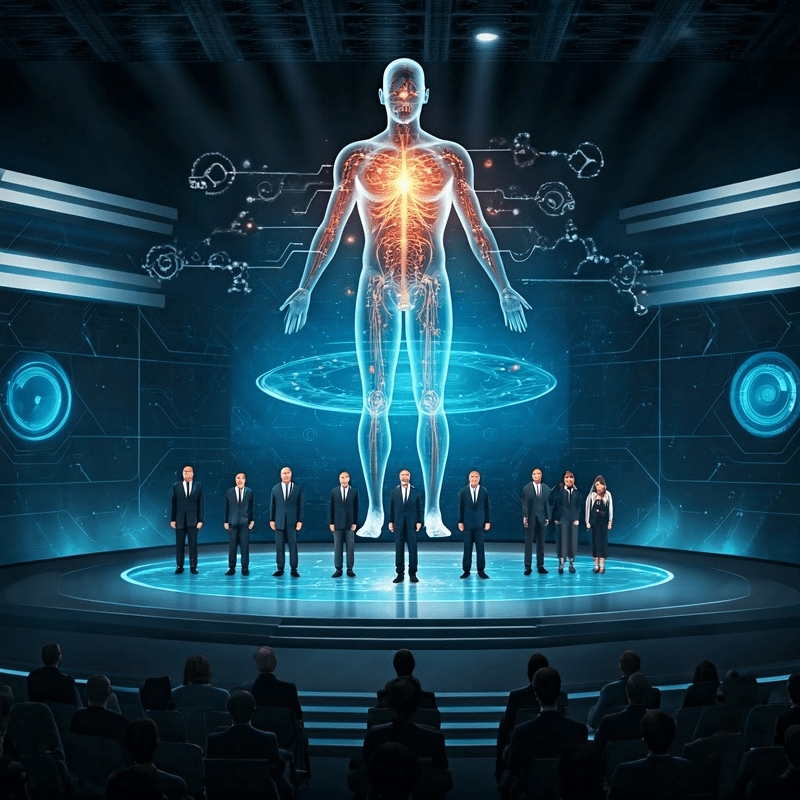
In regard to commerce, there is great benefit in using holographic projections in live performances.
Although holograms in live events are important, they also have challenges. These may include technological complexity, high initial costs, and limitations in venues. Inadequate lighting, unfavorable angles, or substandard projection systems may hamper live event holography.
Another debate is taking place with regard to authenticity. Some scholars have argued that performer holograms lack spontaneity, suggesting that they are not as authentic as people who perform live. These issues need to be addressed with regard to designing holograms, particularly those involving real people.
With advancements in technology, it can be anticipated that such restrictions will become minimal, and the experience will seem more natural.
Looking forward, the future of holograms in live events is looking very promising. The advent of real-time rendering technology, artificial intelligence, and projection technology is going to further take the realism of holograms in live events. Concert holograms will soon be able to react in real-time as they respond to the audience's sentiments.
Live holographic technology will probably combine with the technology of augmented reality and immersive audio to generate rich, multi-sensory environments. More advanced entertainment holograms will become less of an entertainment niche and more of an integral part of event design.
Live event holograms are transforming the entertainment industry in the U.S. by integrating technology, creativity, and emotive storytelling. By using concert holograms, live event holograms, stage performances by holographic images, entertainment holograms, and holograms of virtual performers, viewers have been presented with unique forms of entertainment. What started out as a technological project has developed into an effective tool of engagement and expression. As innovation keeps advancing, the future of holographic projections in live events is that they will neither replace the classical performance nor continue to develop in the same boundaries that the audience is accustomed to when they enter an event space.
In most hologram implementations in live event settings, holograms tend to be created from previously recorded digital content that is project-mapped in real time during the event. However, technological developments in live event holography have made it possible to have controlled and adjusted holographic elements that can sync up to the beats of the music and interact with the live show participants. Although not exactly live in the conventional context, live holographic show performances can feel dynamic and responsive to the audience.
Concert holograms are becoming more popular as they have the benefit of providing the public with something that no other experience can deliver. Concert holograms allow the public to enjoy performances that might not have been possible. Moreover, the use of concert holograms assists the organizers of such events in attracting more people and getting the necessary publicity.
It doesn't seem like virtual performer holograms are going to replace real artists anytime soon. What's expected is that they're going to serve as additions to live performances with their new forms of creative expression. Some fans still find real artists’ authenticity attractive. Entertainment holograms and virtual performer holograms can only be supplemental additions, enhancing what can be done at performances with the living artists in the spotlight.
This content was created by AI