

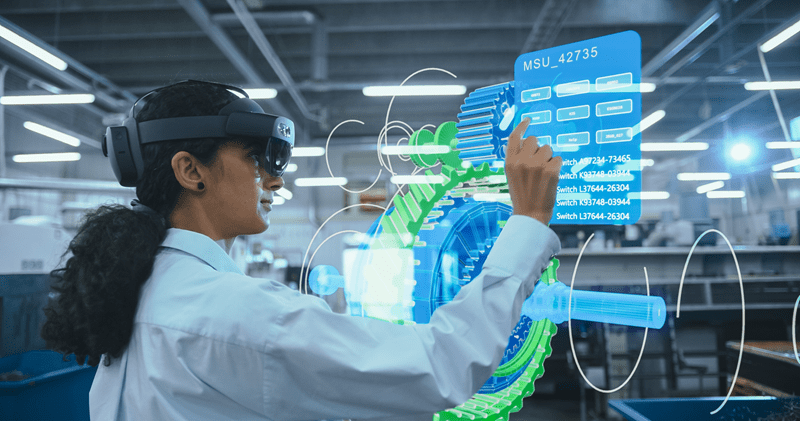
Holographic projections have come a long way from science fiction. Nowadays, they can be found in product demonstrations, imaging in the medical field, educational systems, and event setup. If you want to achieve success in this venture, you can start with the basic components of the system and the things that you will need.
This tutorial explains the fundamental concepts in easy-to-understand language, describes how the technology functions, and takes you through the tools that you will require, without any complex technical terms.
Holographic hardware is the equipment needed for creating, projecting, and displaying a hologram. Such systems differ from a 2D screen like a TV or a computer monitor because they are designed for images that have a three-dimensional form, either seeming to be floating in space or actually being a 3D image that has depth irrespective of the viewing angles.
Essentially, holography is all about controlling light in intricate detail. The equipment interacts to record or project light patterns in such a way that the human eye sees them as three-dimensional. Contemporary systems vary from basic display fans to installations in research labs that employ laser technology.
To better comprehend the hardware component, it would be useful to understand the fundamental principle of holographic display technology. A 3D display hardware does not show pixels on a screen; it is a manipulation of light waves that recreates how light would be reflected from an actual object. When you see that light, your brain perceives it.
Some are reflective, some are diffraction-based, and some involve rapidly rotating an LED screen to create the illusion of depth. Each method calls for its set of components, but each has one purpose in common: to provide realistic graphics without the need for special glasses.
Entry into holography also does not require investments in costly equipment used in the lab. There also exist systems for beginners and intermediates that share core components. Knowledge of these components will help you choose the correct system for your purposes.
The display unit is the most visible component of the system. This can range from many possibilities, such as a transparent screen, an LED fan, a pyramid reflector, or a volumetric box. These units are significant components of 3D display units because they impact how viewers perceive the hologram.
The lighting used can differ depending on the setup. Basic lighting can come from LEDs, while more advanced lighting can come from lasers. The lighting can have direct effects on the sharpness of the images produced.
Behind each hologram stands a processor responsible for controlling the image data, timing, and movement. This could be an embedded controller, an embedded media player, or an external computer. The processing power required in holograms, especially in animations, is quite significant.
You will require access for loading or streaming the holographic content. Commonly, these systems accept files introduced either through USB, SD, or wireless connections. Some professional devices for holography can be connected to designing software for real-time control.
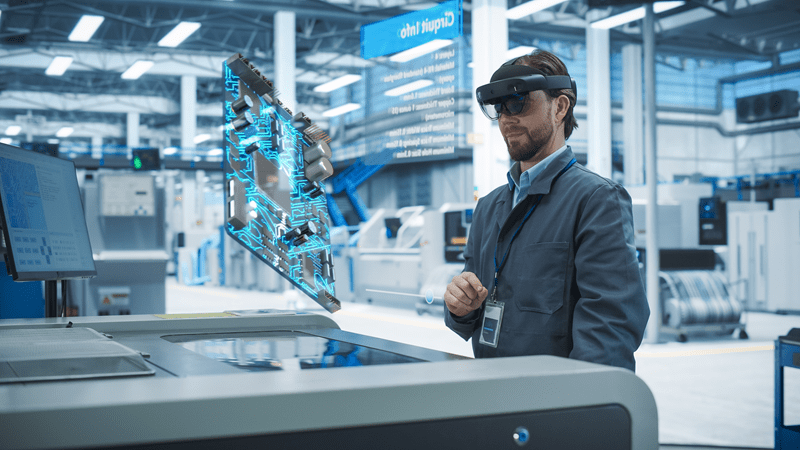
There are a few different types of equipment available for creating a hologram, and understanding these will prevent overpayment or the use of the wrong equipment.
Your decision should be based on your need for graphics, accuracy, or interaction.
When one thinks of holography, one may visualize a laboratory setting. Though such equipment still exists, current physical holography equipment is much more portable. There are also holography systems that incorporate digital processing interwoven with physical tools for projection.
While some are purely digital and utilize illusion-based projection technology, others offer light field representation. Most people new to holography or a company would find illusion-based holography easy and simple.
Holographic technology systems are currently employed in various sectors in the US, as well as in the international market. The technology is currently employed by retail stores to allow customers to view products without having to physically go to the store. The technology is used in the field of organizing events to create interesting presentations.
The technology is also used by medical practitioners in visual representation during training. To cater to the rising demand, the manufacturers are constantly making improvements in the holography devices so as to increase the brightness as well as the mobility of the devices.
In making holographic hardware investments, several factors have to be taken into consideration beforehand.
Ultimately, establish an affordable budget. Whereas entry-level systems cost comparatively little, more sophisticated systems can easily cost more, depending on the desired resolutions.
Even the best hardware requires good software support. Content creation software is what translates the 3D models and animations to formats that the display can support. Some of these devices may have proprietary software support, while others may be compatible with popular platforms that support the creation of 3D models.
A seamless interface between software and hardware will provide the right sense of depth, accuracy of timing, and consistency of performance. It is exactly this ability to strike the right balance between hardware and software that has made the latest technology of holographic displays so accessible.
People often think that holography is something only experts can do. However, with current technology, there are now solutions available even for beginners that involve minimal setup. Even without advanced knowledge, one can interpret holographic visuals.
In a small start, you can understand how various components are linked to each other. Based on experience, you can replace individual components rather than the whole system.
Holography is no longer something that has to be done in high-end research and development labs or expensive productions. With appropriate holographic equipment at hand, you are free to experiment with immersive media that grabs attention and conveys ideas in new and interesting ways.
With knowledge of the basic parts and types of systems that are out there and in consideration of various factors that you should look at when considering raphology, you are ready to enter this new and exciting field.
Holographic displays project images that seem to have a life of their own, as opposed to 3D TV displays that require flat screens and special glasses.
Not necessarily. Starter systems can be found at an affordable cost and are suitable for personal projects.
Most of the systems will feature basic software, but expertise in advanced content, 3D modeling, or animation will be required.
Some systems work outdoors, but you’ve got to think about things like brightness, weather, and where you’ll get power. It’s important to check those carefully before you install anything.
This content was created by AI